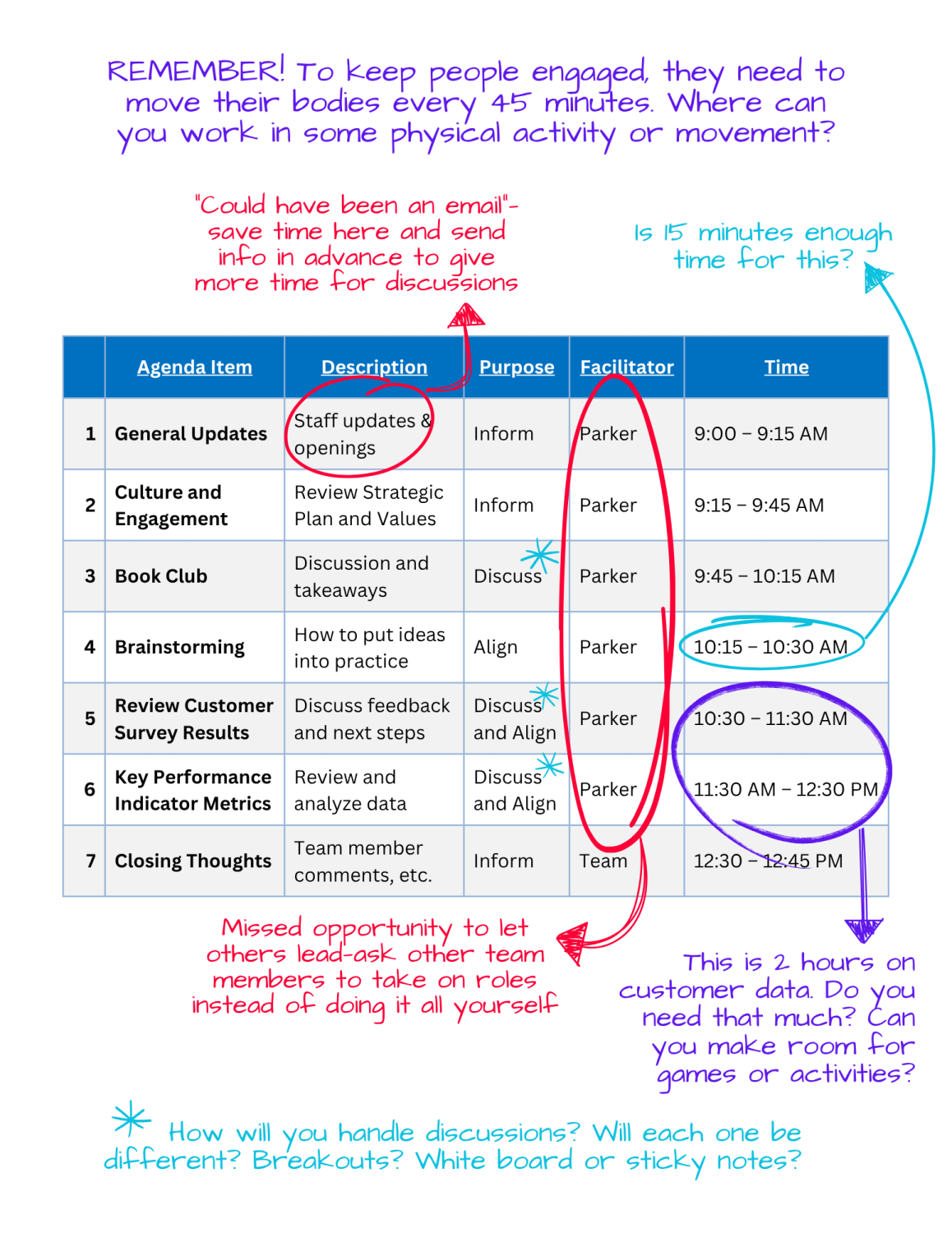
Ask different team members to lead segments of your meetings rather than facilitating every session yourself. Even brief items, like book discussions or updates, can distribute ownership, increase engagement, and allow new voices to emerge.
Think strategically about your agenda. For instance, can informational items (like personnel or operational updates) be circulated ahead of time? This frees up meeting time for meaningful discussions, rather than passive listening.
Bring Team Values to Life
Instead of simply reviewing your organization’s purpose or values, form breakout groups (pairs or small teams) to explore how the team currently demonstrates these values through actual behaviors. Capture insights through sticky notes, whiteboards, or visual representations to energize participation and spark deeper conversations.
Mix Up Interaction Styles
Variety keeps brains alert. Rotate between dyads (pairs), triads (small groups), full-team discussions, or even silent brainstorming sessions. Plan brief activities every 45 minutes to get people moving—this boosts attention and improves retention.
Incorporate simple games or icebreakers to spark interaction and break down barriers. Even a quick round of “meeting bingo,” where participants walk around asking each other fun or insightful questions, can shift the energy from passive to active and open up communication channels.
Engaging meetings are interactive, diverse, and thoughtfully facilitated. By distributing leadership roles, maximizing discussion time, creatively involving everyone, and regularly injecting a bit of fun, you’ll create an environment that energizes participants and enhances productivity. Remember, meetings are most impactful when every voice has room to speak—and when every participant actively contributes.